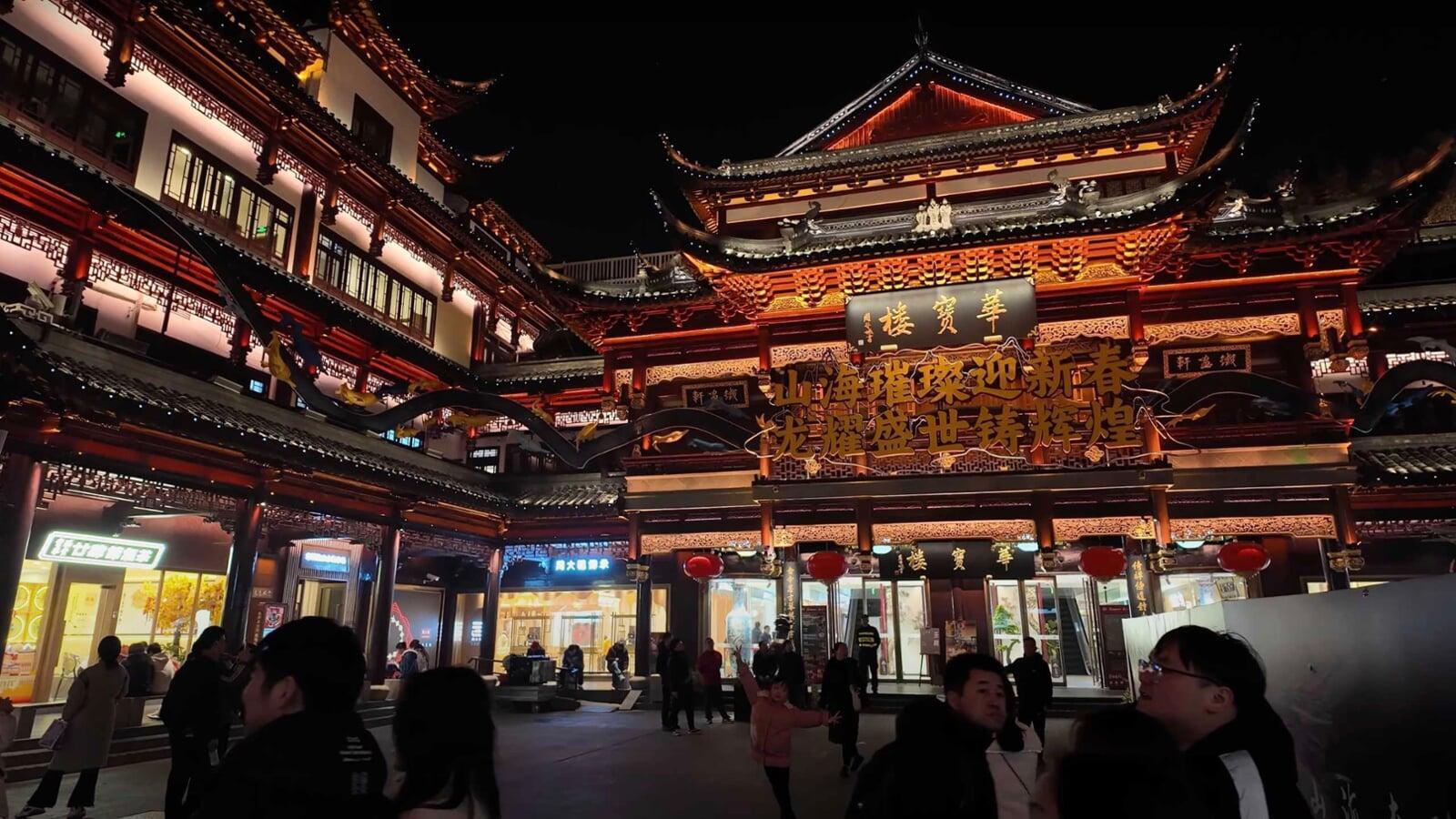
City God Temple (城隍庙)
The City God Temple dates back to the Ming Dynasty (15th century) and is dedicated to the City God — a Taoist guardian deity believed to protect the local community. In traditional Chinese belief, each city had its own “Chenghuang,” responsible for overseeing both the spiritual and administrative wellbeing of the area.
Today, the temple remains an active place of worship. Visitors entering the complex will notice incense smoke rising from large bronze burners, devotees bowing in prayer, and red lanterns hanging from painted beams. The architecture features classic southern Chinese temple design: sweeping black-tiled roofs with upturned eaves, decorative ridge ornaments, carved wooden brackets, and vibrant painted panels.
Inside the halls, statues of Taoist deities sit behind altar tables laden with offerings of fruit and flowers. The atmosphere is markedly different from the calm aesthetic of Yu Garden — here the mood is devotional and dynamic. Even travelers who are not religious often find the temple culturally compelling, as it offers insight into traditional urban folk religion and local spiritual customs.
Allow around 30–45 minutes to explore the temple respectfully. Modest dress and quiet behavior are appreciated, especially near active worshippers.
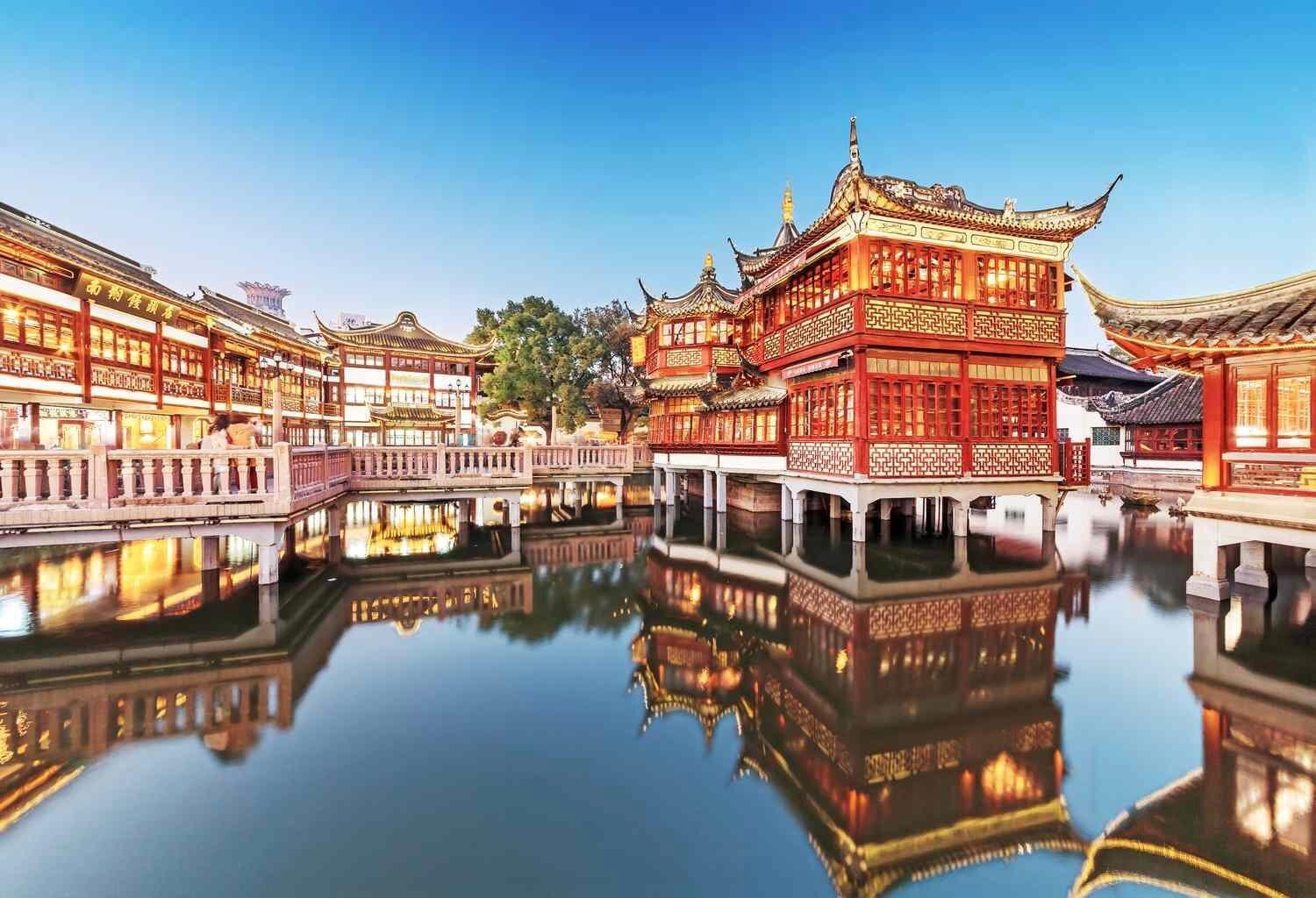
Yuyuan Bazaar (豫园商城)
Surrounding the temple and garden is the bustling Yuyuan Bazaar — a large pedestrian commercial district built in traditional Jiangnan architectural style. Whitewashed walls, dark timber frames, curved bridges, and red lanterns create a picturesque setting that is especially atmospheric in the evening when lights reflect across the ponds.
The bazaar is famous for local snacks and traditional products. The most well-known culinary highlight is xiaolongbao (soup dumplings), particularly from long-established brands such as Nanxiang. Visitors queue to taste freshly steamed dumplings filled with savory broth and minced pork, served in bamboo baskets.
Beyond food, the bazaar offers tea shops, silk stores, calligraphy brushes, jade jewelry, handicrafts, and souvenir items. While some goods are aimed at tourists, the area still reflects Shanghai’s historic marketplace culture. Bargaining may be possible in certain shops, though not all vendors negotiate.
Because it is one of Shanghai’s most popular attractions, the bazaar can be crowded — especially on weekends and public holidays. Late afternoon and early evening provide a balance between lively atmosphere and manageable foot traffic.