Sansui Hall and the Grand Rockery
(三穗堂与大假山)
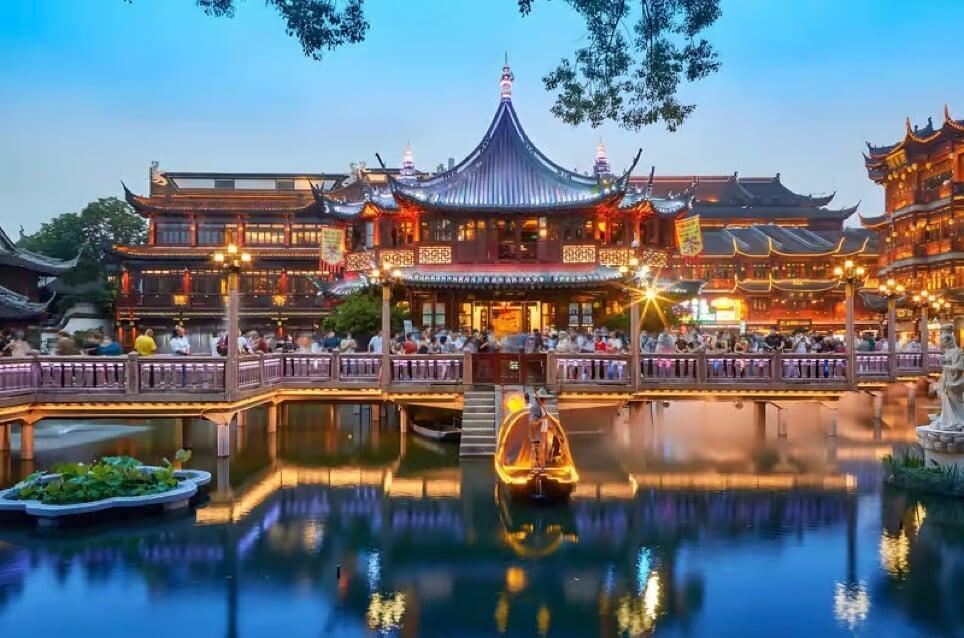
Most visits begin in the southern section near Sansui Hall, historically used for banquets and gatherings. Immediately behind it rises the Grand Rockery — one of the largest and most impressive artificial rock formations in southern China. Constructed from yellow stone transported from Zhejiang Province, the rockery reaches roughly 12 meters in height and is designed as a miniature mountain world.
Narrow passageways, small caves, and steep stairways wind through the formation, leading to elevated vantage points where tiled rooftops and ponds unfold below. From the summit, you can appreciate how the garden compresses vertical and horizontal space, creating the illusion of vast natural terrain within limited urban acreage. This opening section sets the tone: rugged stone balanced by refined architecture, grandeur softened by intimacy.
Wanhua Chamber (万花楼)
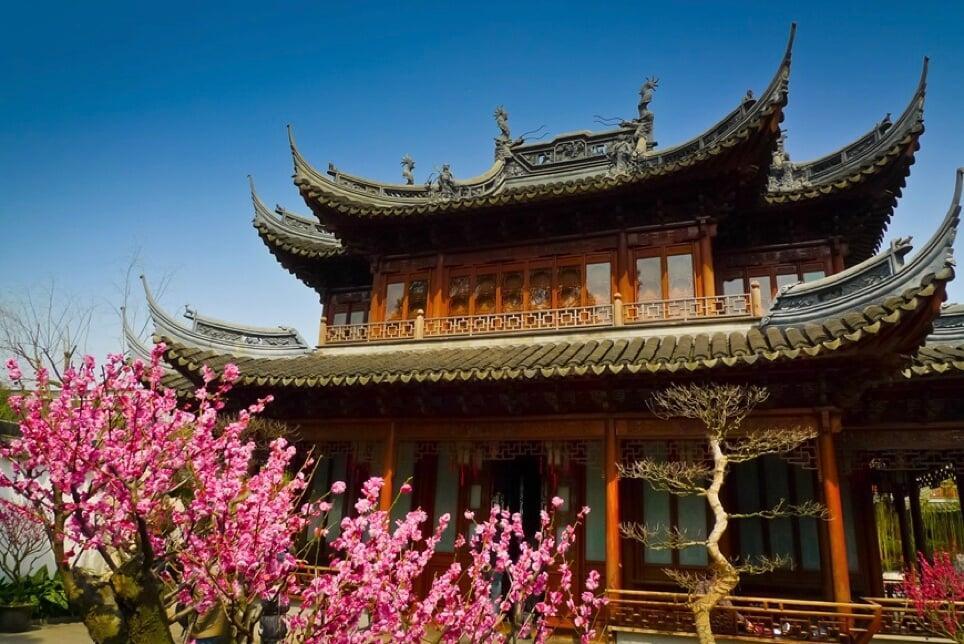
Moving deeper into the garden, the atmosphere becomes more delicate in the Wanhua Chamber area. This section emphasizes ornamental craftsmanship and botanical symbolism. Decorative lattice windows display motifs of the “Four Gentlemen” — plum blossom, orchid, bamboo, and chrysanthemum — representing resilience and integrity in classical Chinese culture.
A highlight here is the centuries-old ginkgo tree believed to date back to the garden’s early years. In autumn, its golden leaves transform the courtyard into one of the most photogenic scenes in Shanghai. The interplay between aging wood structures, filtered light, and seasonal foliage creates a serene, contemplative environment that contrasts with the dramatic stone formations of the previous section.
Dianchun Hall and the Dragon Wall
(点春堂与龙墙)
In the northeastern section stands Dianchun Hall, meaning “Heralding Spring.” This hall is historically significant and architecturally elegant, with sweeping eaves and carefully proportioned courtyards. Surrounding ponds and smaller rockeries create layered depth as you approach.
One of the most striking features here is the Dragon Wall — an undulating white wall crowned with sculpted dragon forms. These dragons, symbolic of power and protection, appear to glide along the ridgeline, separating spaces while simultaneously decorating them. The wall demonstrates how boundaries in classical gardens are never merely functional; they are artistic statements that shape both movement and visual composition.
Yuhua Hall and the Exquisite Jade Rock
(玉华堂与玉玲珑)
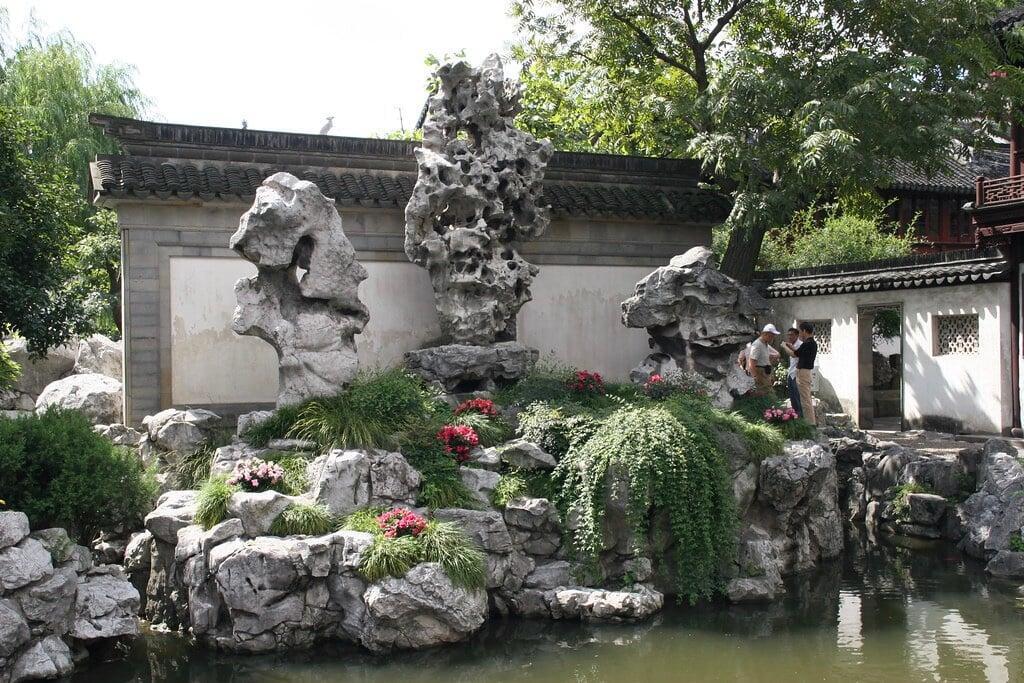
Yuhua Hall anchors one of the garden’s most treasured displays: the Exquisite Jade Rock (Yulinglong). This porous Taihu limestone monolith stands over three meters tall and is celebrated for its perforated surface and sculptural silhouette. Light passes through its naturally formed holes, creating dynamic patterns of shadow throughout the day.
The rock exemplifies the Chinese aesthetic principle that values irregularity, asymmetry, and natural transformation. Positioned beside reflective water and framed by wooden corridors, it becomes both sculpture and landscape centerpiece. Visitors often linger here, observing how shifting sunlight subtly alters the rock’s character.
Huijing Hall and the Jiyu Water Corridor
(会景楼与积玉水廊)
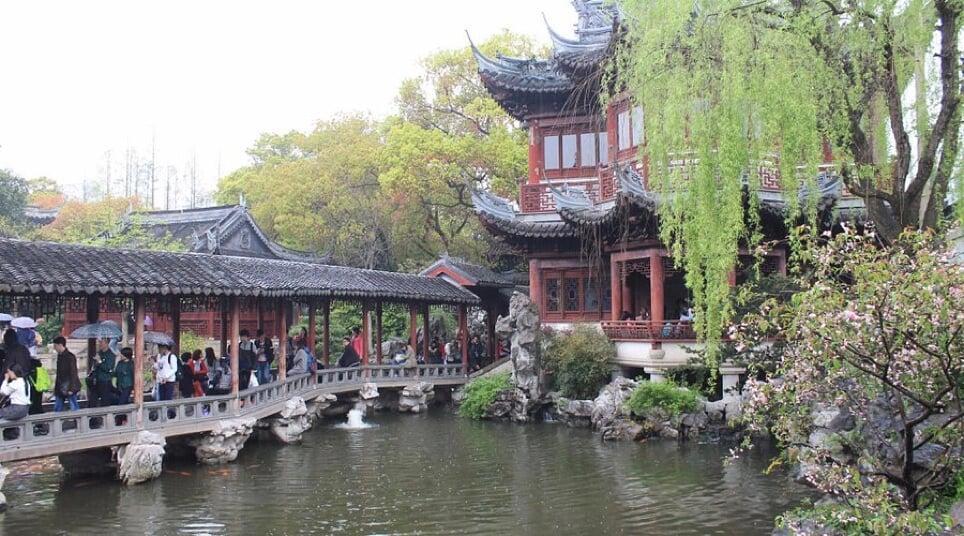
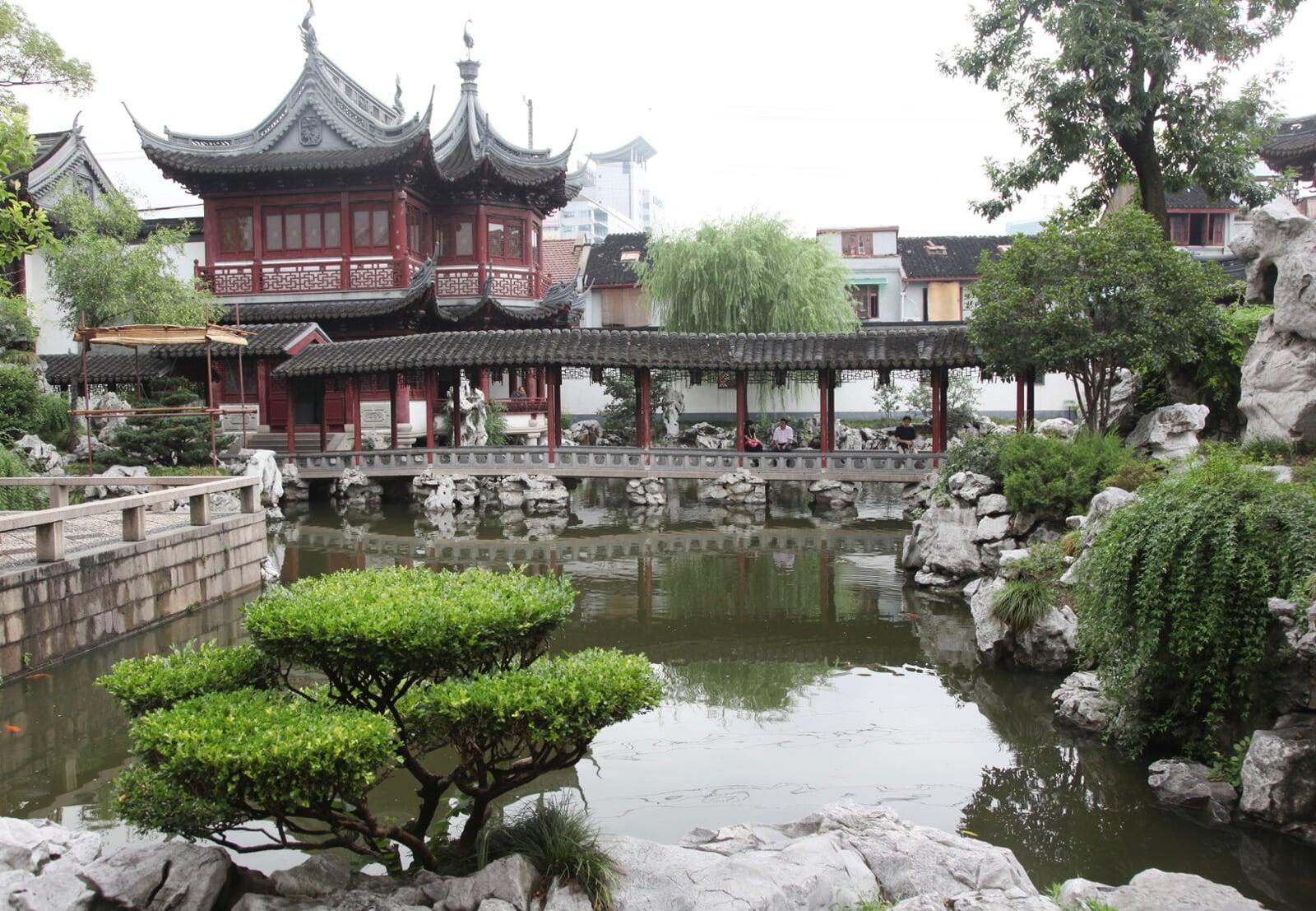
Huijing Hall, whose name suggests “gathering all scenery,” overlooks one of the most tranquil sections of the garden. Adjacent to it stretches the Jiyu Water Corridor — a long covered walkway extending over water. This corridor invites a slower pace; wooden beams cast soft shadows while koi glide beneath the surface.
The design here highlights reflection — architectural forms mirrored in water, framed vistas revealed through corridor openings. Compared to the earlier dramatic rockeries, this section feels meditative and horizontal, emphasizing balance and quiet rhythm rather than vertical spectacle.
The Inner Garden (内园)
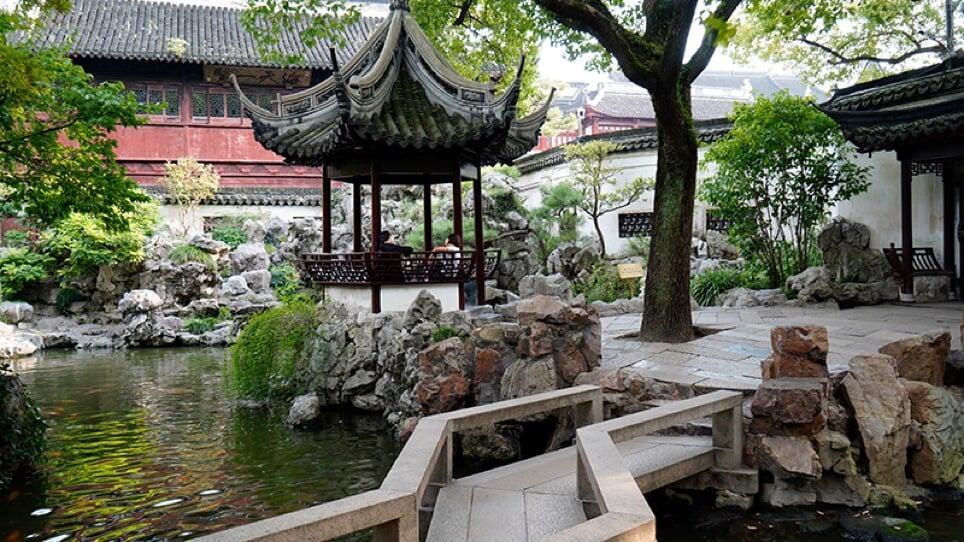
The Inner Garden, added during later restorations, offers a more intimate and compact layout. Smaller courtyards, modest pavilions, and intricately arranged stones create the feeling of a private retreat within a retreat. There is a traditional stage structure used historically for performances, reinforcing the garden’s role as a social and cultural venue rather than merely a visual landscape.
Because many visitors concentrate on the central highlights, this section often feels calmer. The atmosphere encourages slower exploration — observing carved beams, antique furnishings, and the subtle layering of stone, water, and vegetation. It provides a fitting conclusion to the garden’s narrative journey.